
Sprained ankles - why and how rehab works
This Blog post was inspired by an injury to my 14 year old son Louis. Now, thankfully he is going to be fine - but as you can see from the photo, he had a pretty nasty ankle sprain.
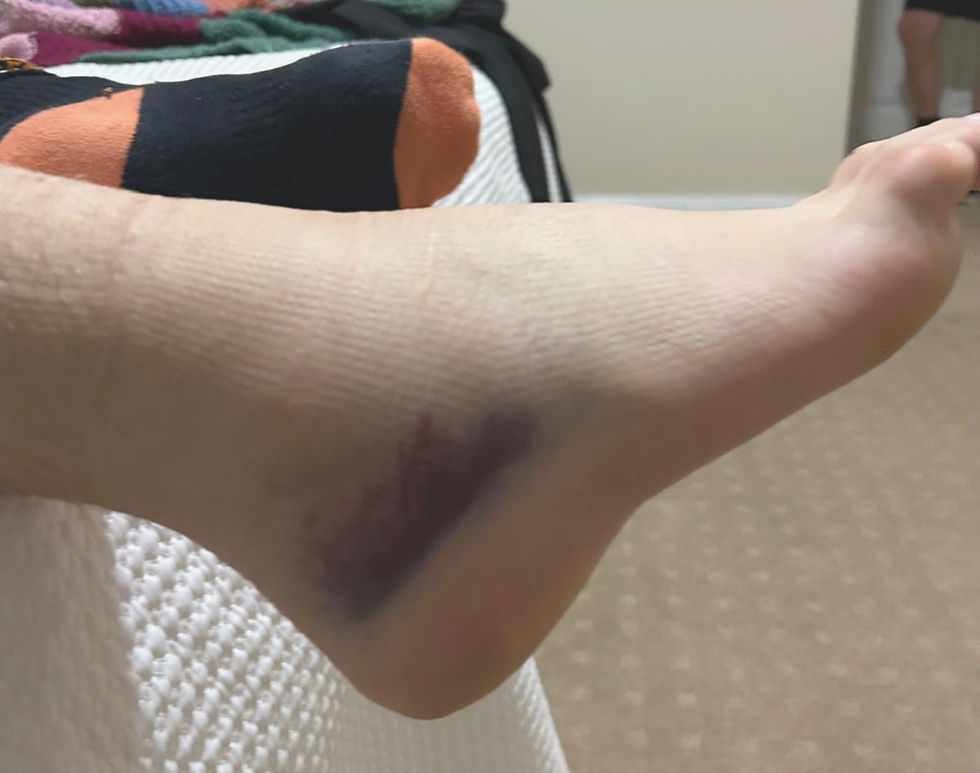
As a family, we love Basketball, and like with any sport, injuries are likely to happen. This one happened trying to save a ball going out of bounds. It was game 1 of 4 in a weekend away in Griffith - so as you could imagine he was not happy.
Ankle sprains are very common, but they vary greatly in the amount of damage they do. From fractures, ligament tears, muscle strains, dislocations and to the “high” ankle sprain.
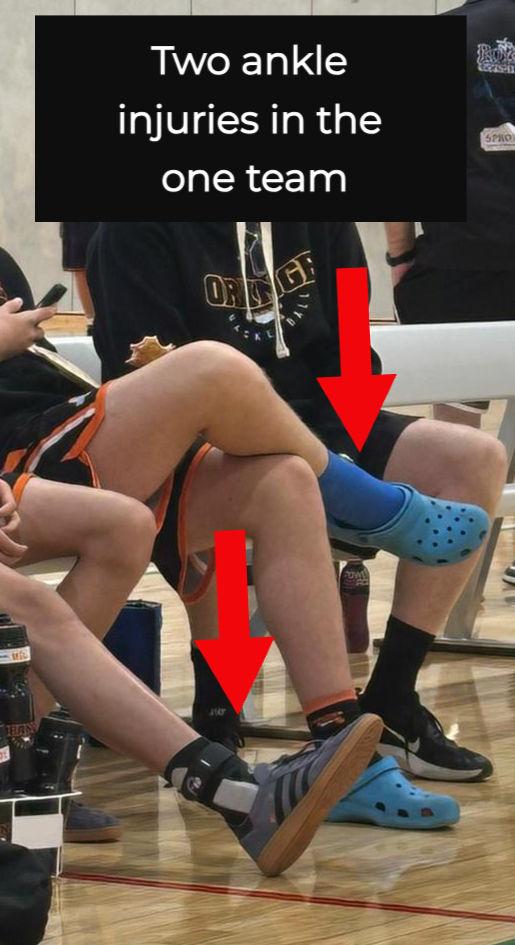
The thing that actually inspired me to write this article though - was the conversation I had with my son about what needed to be done to get him back on the court and playing by finals time.
As any parent can attest to - it can be hard to get a 14 year old boy on board with “rehab”. He did the initial wrap, elevate and rest thing really well, but getting him onboard with why he needed to do "other things " was something I found tough to encourage (encourage is my word - I am sure he would call it something different).
But then i caught him in a good moment, and got him standing on a wobble board. (yes of course I happened to have one at home). I started by asking why he thought it might be more difficult to stand on his injured side and balance versus the non injured side.
Simple question - but hard to answer when your Dad is into the details…..
SO - what do you think is going on in a recently injured joint like the ankle that makes it hard to stand on?
Well - it just so happens its a lot of things - but not just the pain.
A major factor is the feedback from the joint and the surrounding muscles and ligaments. When you sprain an ankle or injure nearly any joint, you disturb the tissues around it.
Some of those tissues - like the ligaments of the ankle that we are all familiar with “spraining” or “twisting” - contain lots and lots of receptors that give you feedback as to the amount of stress or stretch they are under. It is these sensors that determine how you contract the muscles around the ankle to control your position and give you feedback about the changes happening in and around the joint.
Fun Fact: Did you know that certain receptors are programmed to activate during rapid length changes, others respond only to slow alterations, and some are triggered only at the extreme end of your motion range? Quite an impressive arrangement, isn't it!
Now when the tissue heals - for instance the ligaments - the ankle can still feel unstable as the receptors and nerve endings don’t suddenly just return to normal. In fact some studies have suggested that the nerve endings can take from 6 weeks to a year to repair and return to similar levels of function. Even in the absence of pain.
So what can you do to restore the brain to ankle connection?
Well - this is where it gets interesting.
Initially, you can perform simple, gentle movements while the ankle remains quite sore, such as mimicking the act of writing the alphabet with your big toe. By tracing letter shapes in the air with your foot, you're prompting the brain to recognise that the foot is intentionally moving to form specific shapes. This exercise also helps to mobilise a stiff and swollen joint, enhancing blood flow and circulation to and from the injured area.
Once it is progressing ok - you can then move to weight bearing tasks like standing on a rocker board that only rocks forwards and backwards on two feet - and controlling the forward and backwards action. This can move to single foot - then you can progress to the Wobble board (wobbles in all directions) in a similar fashion.
Now that is pretty good - but what if you want to really help fine tune the attention you are paying to the “feedback” from the joint?
One approach is to remove other senses that assist in perceiving your surroundings and determining movement, such as your vision. You could begin by standing with your eyes closed and feet together, as a narrower base makes balancing more challenging. Progressing to standing on the injured leg with your eyes closed would be the next level.
You will feel your toes grip the ground - your weight shift and your ankle working hard to keep you upright.
This sort of practice will come in handy when you walk to the bathroom in the middle of the night and step on a shoe that "someone" left in the middle of the room. Without the good feedback from your ankle you may just end up head first into the wall.
But what did i have Louis do? Well as we chatted away (and by we i mean me) i had him standing on his injured foot on the rocker board - trying to juggle the tennis balls i was throwing to (at) him.
Yep - thats right - making him try to juggle while balancing on one leg.
If your brain, eyes and hands are busy doing a complex task - the feedback from your ankle is going to have to be kicking in for you to maintain a steady position - and lets face it - its a bit more fun as well.
By my thinking - if he can manage that he can probably take to the court - and so he has.
Oh the joys of having me as his Dad!!!
Now to see if his team can win in the Finals next weekend - and with everyones ankles back to working well again.






Comments